Stoughton, MA
Stoughton Pediatric Dentistry, With Every Material Explained
We care for kids' teeth from the first tooth through the teen years: exams and cleanings, sealants, fluoride treatment, fillings, pediatric crowns and sedation dentistry. Before any treatment, we show you which materials we would use and why. Families come to us from Stoughton, Canton, Easton and nearby towns.
- 11+ years in practice
- Materials explained before treatment
- Care for babies through teens
- Sedation available when needed
Families We Serve
Our office is in Stoughton, MA, and we see kids from across the surrounding area. Families regularly come from Canton, Sharon, Easton, Randolph and Avon, as well as Brockton, Holbrook, Braintree, Norwood and Milton.
- Stoughton
- Brockton
- Randolph
- Easton
- Canton
- Sharon
- Holbrook
- Avon
- Braintree
- Norwood
- Milton
Not sure whether the drive works for regular cleanings? Give us a ring and we can talk through scheduling that fits around school and activities.
Dental Care Built Around Growing Teeth
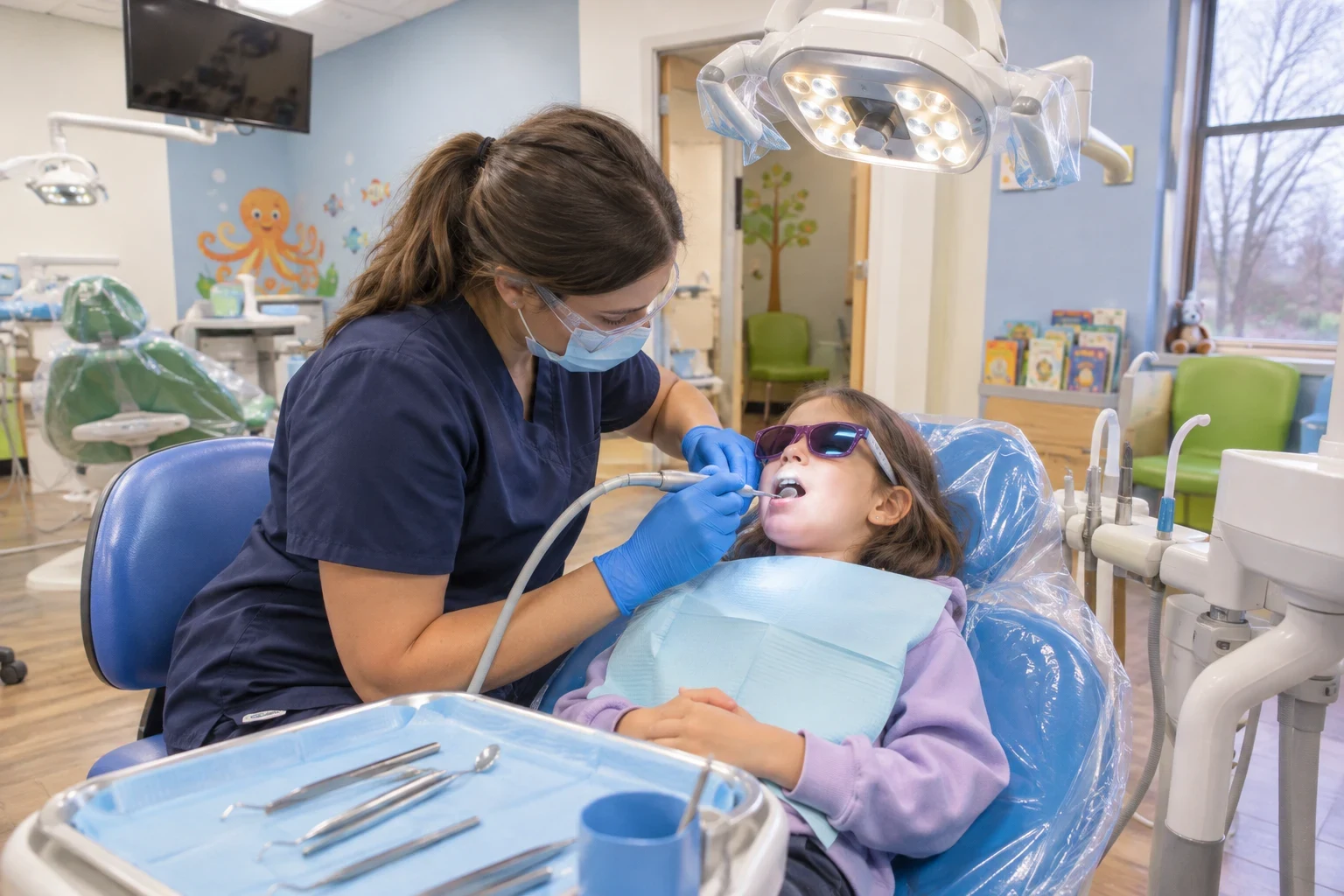
Baby teeth have thinner enamel than adult teeth and larger nerve chambers, so decay reaches the inside of the tooth faster. Our care is planned around that. Prevention comes first with exams and cleanings, sealants and fluoride treatment. When a tooth needs work, we offer fillings, pediatric crowns, root canals, extractions, space maintainers and frenectomies, with sedation dentistry for kids who need extra help staying calm and comfortable.
Exams & Cleanings
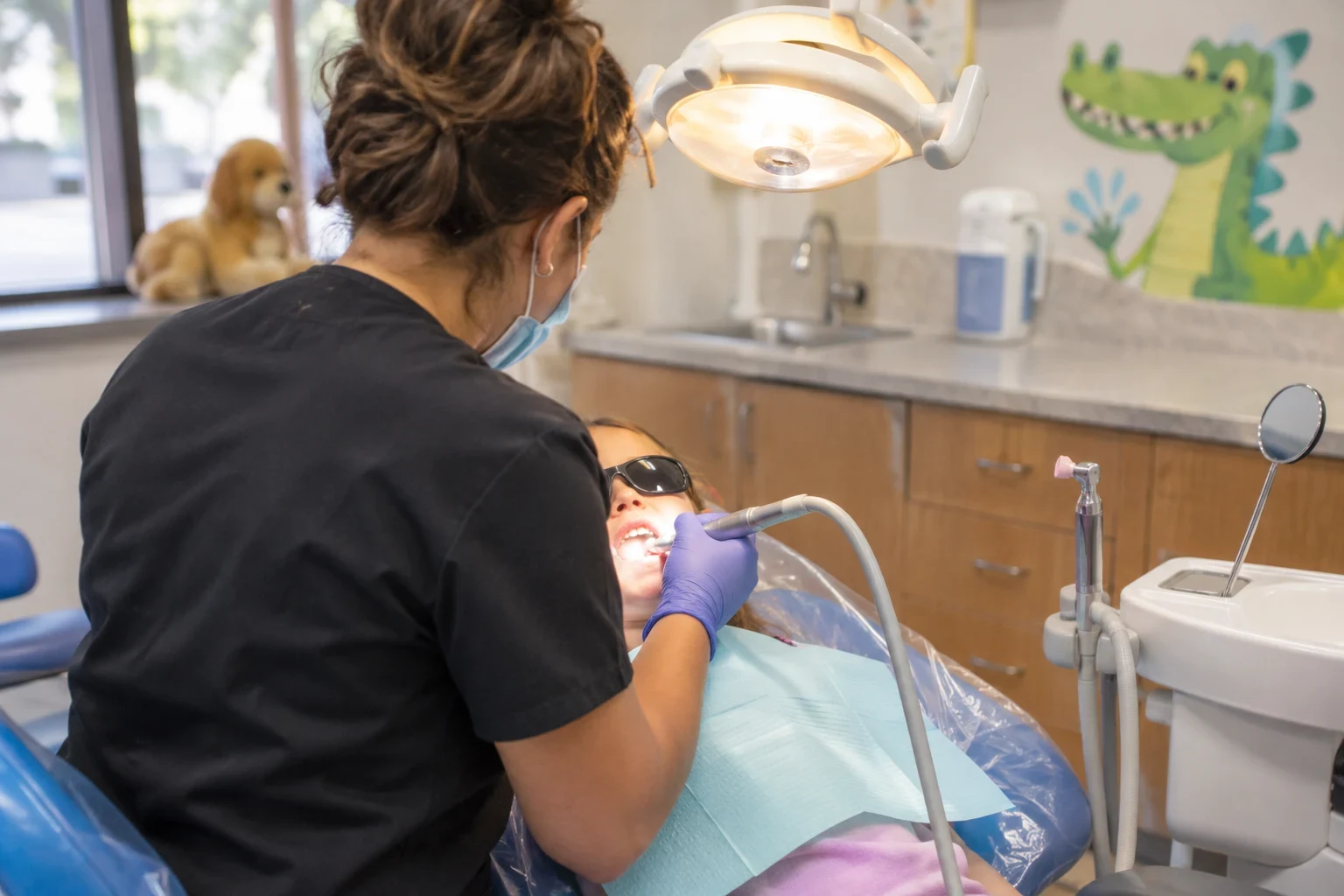
Checkups that find soft enamel and early cavities while they are small, plus a cleaning matched to your child's age, teeth and comfort level.
Sedation Dentistry
Nitrous oxide and other calming options for kids who need dental work but struggle with fear, gagging or long appointments.
Fillings
Tooth-colored fillings for baby and permanent teeth, with a plain explanation of which option suits your child's cavity and why.
Root Canals
Pulpotomy and pulpectomy for baby and permanent teeth, with a plain explanation of the medicaments, fillers and crowns that save an infected tooth.
Extractions
When a tooth can't be saved or is blocking an adult tooth, we remove it gently and plan for the space it leaves behind.
Frenectomies
Tongue-tie and lip-tie releases for babies through teens, with a clear explanation of laser and surgical methods and the aftercare that keeps the result.
Sealants
A thin protective coat painted into the grooves of back molars, with the type of sealant matched to how far each tooth has come in.
Space Maintainers
Fixed steel band-and-loop, lingual arch and removable acrylic designs that keep a gap open until your child's permanent tooth arrives.
Pediatric Crowns
Full-coverage crowns for baby teeth and young permanent molars, with stainless steel, zirconia and resin options compared before treatment.
Fluoride Treatment
A thin coat of fluoride varnish painted on your child's teeth to harden enamel against acid and help reverse early white-spot decay.
How a Visit Works
Here is what happens between registering your child and the routine check-ins that keep teeth on track.
- 1
Register by phone
Call us to register your child as a new patient. We will ask for basic health history and insurance details and find an appointment time that suits your family.
- 2
The first visit and exam
We count and check every tooth, look at the gums and bite, and take X-rays only when they are needed to see between teeth or below the gumline. A cleaning and fluoride varnish usually come next.
- 3
A plan with the choices laid out
If something needs treatment, we show you what we saw and explain the materials we would use, such as composite versus glass ionomer for a filling, or stainless steel versus zirconia for a crown. You decide with full information.
- 4
Treatment day
We keep the appointment as short as the work allows and tell your child what is coming before each step. If sedation is part of the plan, we give you clear instructions about eating and drinking beforehand.
- 5
Check-ins and recalls
We schedule follow-up visits to check restorations and keep cleanings on track, usually every six months for most kids.
Why Parents Choose Our Practice
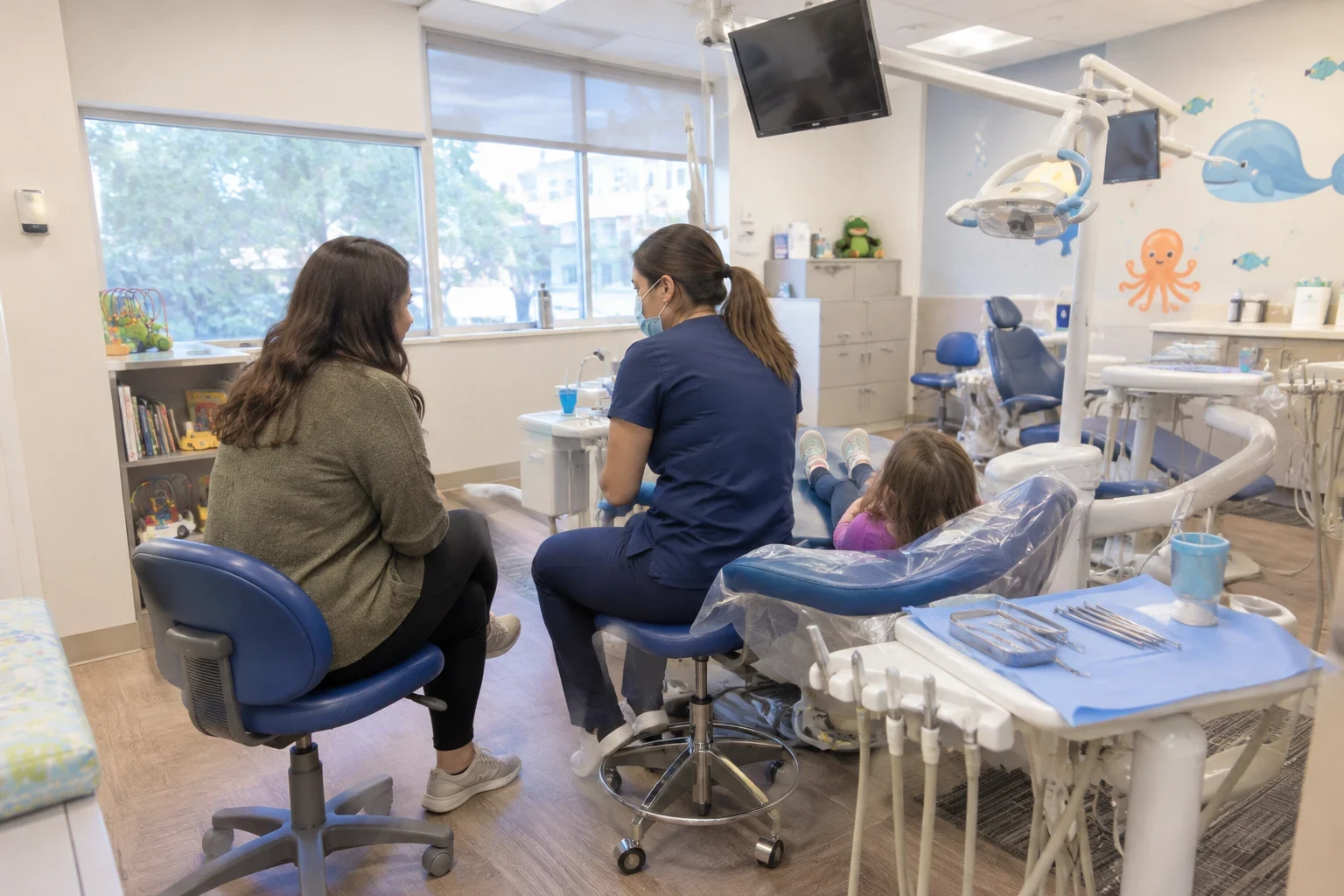
Most parents want two things from a pediatric dentist: a child who leaves calm, and a clear answer about what was done and why. Here is how we work toward both.
- You hear about materials before we start
- A back baby molar can be restored with tooth-colored composite, glass ionomer, a stainless steel crown or a zirconia crown. Each holds up differently under chewing. We tell you which one we recommend for that tooth, how long that tooth still needs to last, and what the trade-offs are.
- We match the restoration to the tooth's lifespan
- A baby molar that will fall out in a year does not need the same restoration as one that has to last until age 12. We look at your child's age and X-rays to see how close the adult tooth is before choosing.
- Kid-friendly pacing
- We explain each instrument in simple words and let kids see and touch what is safe to touch. Short, predictable steps help most children stay comfortable in the chair.
- Prevention gets real attention
- Sealants and fluoride varnish are quick and painless, and they protect the grooves and enamel where kids' cavities usually start. We would rather keep a tooth healthy than fill it later.
- Clear payment choices
- You can pay with a Visa, MasterCard or Discover card, and we work with most insurance plans. Families who want to spread out costs can use the CareCredit Patient Payment Plan. We review the treatment plan with you step by step before you agree to anything.
About Stoughton Pediatric Dentist
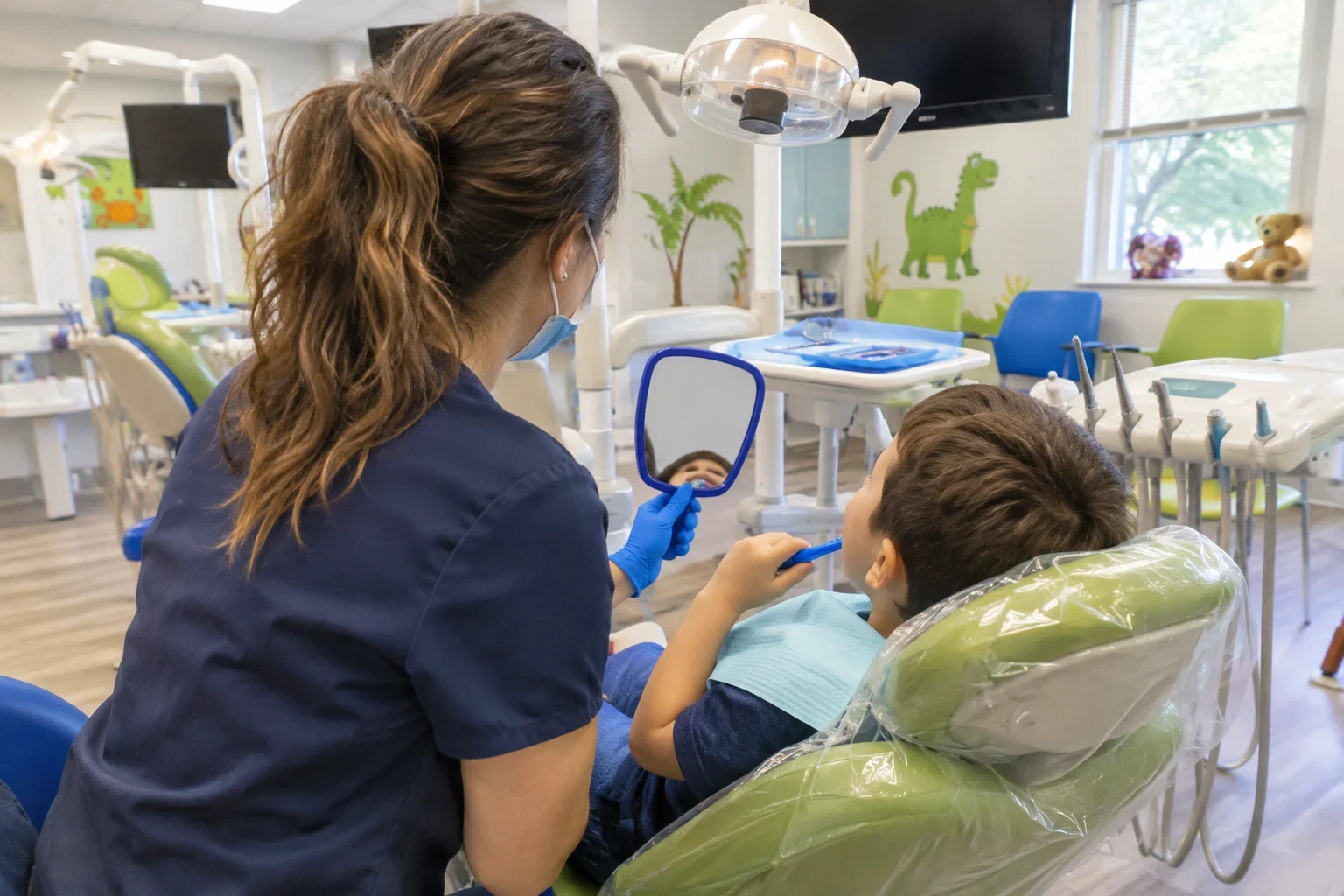
We are a pediatric dental practice that only treats kids, from babies getting their first teeth to teens finishing high school. That focus shapes everything from how we talk to a nervous four-year-old to how we pick restorations for teeth that are still changing.
Our approach is simple: explain the why, not just the what. Parents should know why a sealant is placed on a six-year molar, why a stainless steel crown might outlast a large filling on a baby tooth, and why we sometimes recommend watching a small spot instead of drilling it. When you understand the reasons, decisions about your child's care get easier.
- In business
- 11+ years in practice
Questions Parents Ask Us
Something not covered here? (781) 494-8370
When should my child have a first visit?
Aim for around age one, or roughly half a year after that first tooth breaks through, whichever happens sooner. The appointment is short and mostly about checking teeth and gums, spotting early enamel problems and talking with you about brushing, bottles and snacks. It also lets your child get used to the office long before any treatment might be needed.
Why fix baby teeth if they fall out anyway?
Back baby molars often stay in place until age 10 to 12. An untreated cavity can spread to the nerve, cause pain or infection, and in some cases affect the adult tooth forming underneath. Baby teeth also hold space for adult teeth, which is why we may recommend a space maintainer if one is lost early.
What are kids' fillings made of?
We mostly use tooth-colored materials. Composite resin is strong and bonds well, but it needs a dry tooth during placement. Glass ionomer releases fluoride and tolerates a little moisture, which can help with young kids, though it wears faster under heavy chewing. We tell you which one we recommend for each tooth and why.
Should my child get a silver crown or a white crown?
Stainless steel crowns are very durable and need less tooth trimming, which makes them a solid choice for back baby molars. Zirconia crowns look like natural teeth and are popular for front teeth or visible spots, but they need more tooth reduction and careful placement. We compare both for your child's specific tooth.
Are sealants and fluoride really worth it?
Sealants fill the deep grooves on molar chewing surfaces, where food and bacteria collect and toothbrush bristles cannot reach. Fluoride varnish helps strengthen enamel and can slow early decay. Both are quick, painless and need no numbing.
What if my child is very anxious?
Many kids do fine with simple explanations and a gentle pace. For children who need more help, or who need a lot of treatment at once, we offer sedation dentistry and will explain the types, preparation and recovery in detail before you decide.
What payment options do you accept?
Most insurance plans are welcome here. For cards, we take Discover, Visa and MasterCard, and CareCredit Patient Payment Plan financing is available too. When you phone to register, keep your insurance card nearby so we can add the details to your child's file.
What Affects the Cost of Your Child's Care
There is no single price for a visit, because two kids with the same complaint can need very different treatment. The cost depends mostly on what we find on the exam and X-rays and which restoration fits the tooth. These are the main factors.
After the exam, we walk you through the recommended treatment, the materials involved and the costs before any work begins. Nothing is added without your okay.
- How deep the decay goes
- A small cavity in the enamel can take a simple filling. Decay that reaches the pulp, the nerve chamber inside the tooth, may need a pulp treatment and a crown instead.
- Material choice
- Stainless steel crowns are very durable and cost less. Zirconia crowns are white and look natural but need more tooth reduction and a dry field during placement. Composite and glass ionomer fillings differ in strength and fluoride release, and that shows up in cost too.
- Number of teeth and surfaces
- A filling on one surface is less work than one wrapping around two or three sides. Treating several teeth at one visit changes the total as well.
- Sedation
- Some kids cannot sit through a long or complicated appointment calmly, and sedation adds to the cost of that visit. Before it goes into the plan, we talk with you about whether your child truly needs it.
- Your insurance plan
- Coverage for sealants, fluoride, crowns and sedation differs between insurers and policies. We will read through the benefits with you, but the insurer makes the final call on what it pays.
Ready to Register Your Child?
One phone call gets your child set up as a new patient and on the schedule. We will answer your questions about the first visit while we have you on the line.