ServicesFluoride Treatment
Fluoride Treatment for Kids in Stoughton
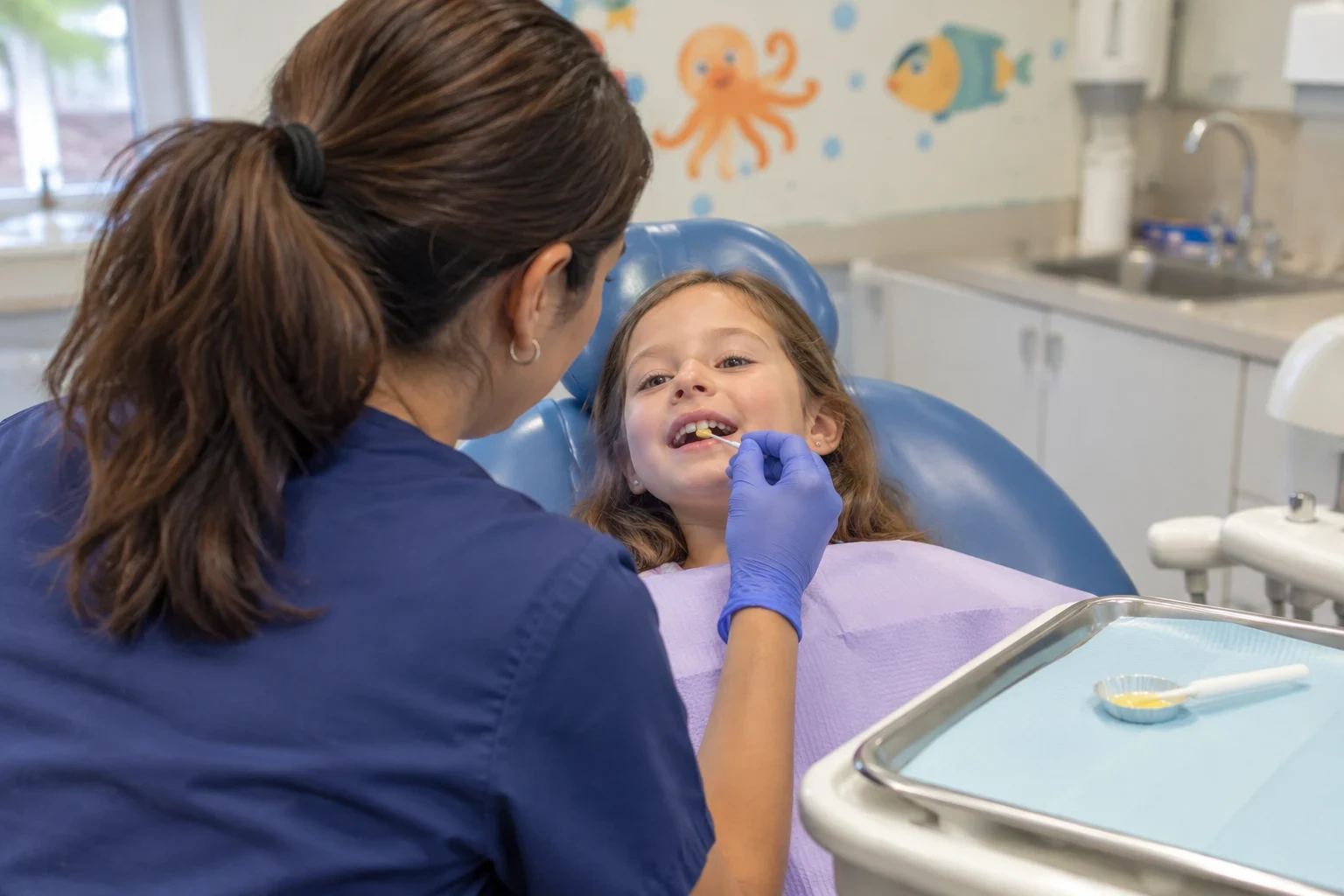
A soft brush and about a minute is all it takes to coat your child's teeth with fluoride varnish. The coating grips the enamel, keeps releasing fluoride for hours and leaves the surface harder for cavity-causing acid to dissolve. There are no trays to hold, no rinsing and nothing to swallow.
What Fluoride Does to Enamel
Tooth enamel is built mostly from a mineral called hydroxyapatite. Every time your child eats sugar or starch, mouth bacteria make acid that pulls calcium and phosphate out of that mineral. Saliva puts some of it back. When the acid wins too often, the enamel softens, first as a chalky white spot and later as a cavity.
Fluoride shifts that balance. When it is present during the rebuilding phase, the enamel reforms as fluorapatite, which holds up better against acid. It also slows the bacteria's acid production. That is why a professional application can stop an early white spot from turning into a filling.
Our job is to pick the right form and the right schedule for your child. Most kids do best with varnish at their regular checkup, and some need more. We explain which option we recommend and why before we apply anything.
Fluoride Options We Use and Why
- 01
5% sodium fluoride varnish
This is our standard for kids of every age. The varnish is a sticky resin that sets as soon as it touches saliva, so it stays on the enamel and keeps releasing fluoride for several hours. Because so little is used and it does not run, it is the safest choice for babies and toddlers who cannot spit yet.
- 02
Why we skip trays and gels for young kids
Foam and gel fluorides are held in a tray for a few minutes. Young children tend to swallow some, which can upset a stomach. Varnish gives a strong dose to the teeth with far less going down the throat.
- 03
Rosin-free varnish when needed
Many varnishes use a pine-based resin called colophony. If your child has a known allergy to rosin or pine products, tell us and we will use a rosin-free formula.
- 04
Home fluoride for higher-risk teens
For some teens, especially those in braces with plaque collecting around the brackets, we may suggest a prescription-strength toothpaste between visits. We explain how to use it and how long, and we only recommend it when the risk is there.
- 05
A risk check at every visit
We look at diet, brushing habits, past cavities and any white spots to decide how often fluoride makes sense. A low-risk child may need it twice a year; a child with active early decay may benefit from a shorter interval.
Questions about Fluoride Treatment?
Call(781) 494-8370Signs Your Child Would Benefit From Fluoride
Chalky white spots near the gums
These are areas where minerals have already been lost. Caught at this stage, they can often harden again with fluoride instead of needing a drill.
Frequent sipping or snacking
Juice, milk in a bottle at bedtime, or crackers through the day keep the mouth acidic for long stretches. Enamel never gets a full chance to recover.
A recent cavity
One cavity means the conditions for more are present. Fluoride helps protect the teeth around a new filling.
Braces or other appliances
Brackets and wires trap plaque in spots a toothbrush misses. White rings around brackets after braces come off are a common result that fluoride can help prevent.
Well water or filtered drinking water
Private wells and many home filters supply little or no fluoride. If your family drinks mostly bottled or filtered water, your child may be getting less than you think.
How a Fluoride Application Goes
- 1
Exam and cleaning first
Fluoride usually follows your child's exam and cleaning. Removing plaque first lets the varnish reach the enamel directly.
- 2
Drying the teeth
We dry a few teeth at a time with gauze or a gentle puff of air. Varnish grips better on a dry surface.
- 3
Painting on the varnish
With a small soft brush, we coat each tooth in a thin layer. It takes about a minute, has a mild flavor, and does not need to be rinsed off.
- 4
Aftercare instructions
Your child can drink and eat soft foods right away. We ask you to skip hot drinks and hard, crunchy or sticky foods for a few hours and hold off on brushing until that night or the next morning so the varnish has time to work.
What Affects the Cost of Fluoride Treatment
A fluoride varnish application is a short, simple step, so what you pay depends more on your dental coverage than on the work itself. Before we apply it, we review what your plan will likely cover. For payment, we take Visa, MasterCard and Discover cards, most insurance plans, and the CareCredit Patient Payment Plan.
- Your insurance plan's rules
- Many dental plans cover fluoride a set number of times per year and only up to a certain age. Teens sometimes age out of that coverage before parents expect it.
- How often your child needs it
- A child at higher risk may benefit from applications more often than a plan covers. We explain the reasoning so you can decide.
- Pairing with other visits
- Applying fluoride at the same visit as an exam and cleaning or sealants avoids an extra appointment.
- Prescription products for home
- If we recommend a high-fluoride toothpaste, that is a separate pharmacy cost from the in-office treatment.
Fluoride Treatment Questions From Parents
Is fluoride varnish safe for my toddler?
Yes. Varnish was designed for young children. Only a very small amount is used, it sets quickly on the teeth, and very little is swallowed. That is why we choose it over gels and foams for kids who cannot spit reliably.
At what age should my child start getting fluoride treatments?
Varnish can start as soon as the first teeth come in. We usually begin at the first visit and adjust the schedule as we learn your child's risk. Earlier protection matters because baby teeth have thinner enamel than adult teeth.
Will the varnish discolor my child's teeth?
Some varnishes leave a faint yellow or dull film for the rest of the day. It brushes off at the next brushing and does not stain the enamel.
We use fluoride toothpaste. Does my child still need this?
Toothpaste delivers a low dose twice a day, which is important. Professional varnish is far more concentrated and stays on the teeth for hours, so it reaches early weak spots that daily brushing alone may not fix. For low-risk kids we may space it out further.
Can fluoride be done at the same visit as sealants?
Yes. Sealants cover the deep grooves on the chewing surfaces, and fluoride strengthens the smooth sides and the spaces between teeth. We often do both at one checkup, applying the sealants first.
How experienced are you with young or nervous kids?
We have 11+ years in practice treating children, from babies getting their first teeth to teens in braces. A fluoride application is quick and painless, and it is often the easiest part of a visit for a nervous child.
Protect Your Child's Enamel at the Next Checkup
We can add fluoride to your child's regular visit and talk through how often it makes sense. Register by phone and we will set up the first appointment.