ServicesFrenectomies
Frenectomies in Stoughton
A tight frenum, the thin band of tissue under the tongue or behind the upper lip, can make nursing, eating or certain sounds harder for your child. We check how that band actually limits movement, explain the release options, and tell you honestly when it is not needed.
What a frenectomy is and when it makes sense
A frenectomy releases a frenum that is too short, too thick or attached too far forward. Under the tongue this is called a tongue-tie (ankyloglossia). Behind the upper lip it is a lip-tie, which can pull on the gum between the front teeth. The release itself takes minutes. The harder part is deciding whether the tie is causing a real problem, and that is where most of our time goes.
We look at function, not just appearance. Plenty of kids have a visible frenum that never causes trouble. A release is the right call when the band restricts lifting or extending the tongue, gets in the way of a deep latch, traps food against the front teeth, or keeps a gap open between upper incisors. With 11+ years in practice, we have seen how often a careful wait-and-watch is the better answer, and we will say so when it is.
Families come to us from Stoughton, Canton, Sharon, Easton and the surrounding towns, often after a pediatrician, lactation consultant or speech therapist has raised the question.
What the work includes
- Functional exam
- We check tongue lift, extension and side-to-side movement, along with lip flexibility and where the frenum attaches to the gum. For babies, we ask about feeding patterns, clicking sounds and nursing pain.
- Method options explained
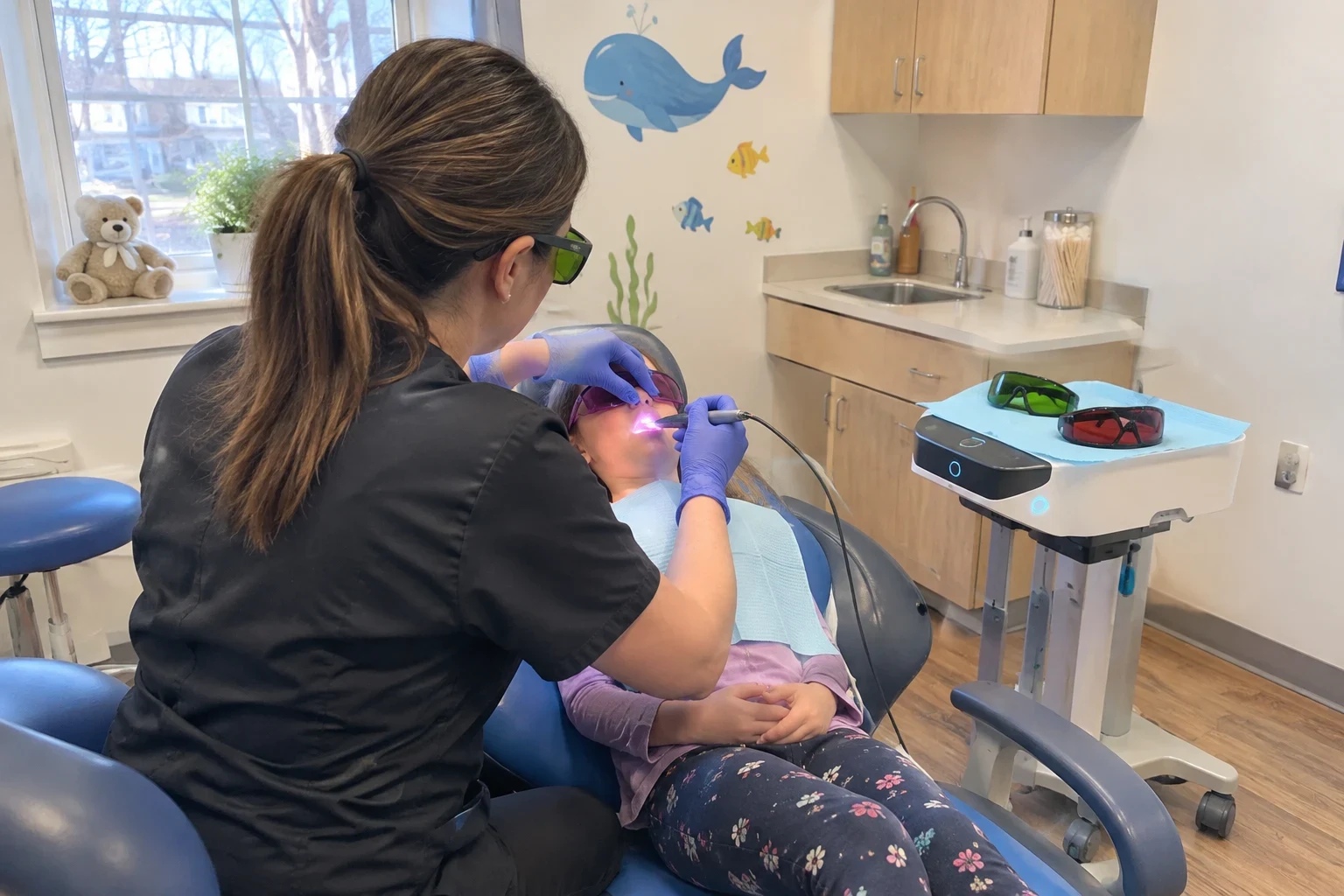
- There are two common ways to release a frenum. A soft-tissue laser cuts and seals small blood vessels at the same time, so bleeding is usually minimal and stitches are rarely needed. Sterile surgical scissors or a scalpel make a clean, precise cut and may be closed with dissolvable sutures. We explain which method we recommend for your child and why.
- Comfort and numbing
- Infants usually need only a topical numbing gel. Older kids and teens typically get local anesthetic. For a child who is very anxious, we can talk through whether sedation dentistry is a reasonable fit.
- Aftercare coaching
- We show you the gentle stretches that keep the released tissue from reattaching as it heals, and you leave with written instructions.
- Follow-up check
- We look at healing and range of motion afterward and adjust the stretching plan if needed.
Signs your child may have a tongue-tie or lip-tie
Painful or shallow latch
Nursing hurts, the latch keeps slipping, or your baby makes clicking sounds and tires before finishing a feed.
Heart-shaped tongue tip
When your child sticks out their tongue, the tip pulls into a notch or V because the frenum is holding it down.
Trouble with certain sounds
Sounds like l, t, d, r and th need the tongue tip to lift. If a speech therapist suspects restricted movement, an exam is worth scheduling.
Gap or plaque at the upper front teeth
A thick lip frenum can hold the two front teeth apart or keep the upper lip from flipping up, which makes brushing that area hard and lets plaque build up.
Food pocketing or picky textures
A tongue that cannot sweep the cheeks and roof of the mouth can leave food sitting around the teeth or make chewing some textures frustrating.
What affects the cost of a frenectomy
The price depends on which frenum is released, the technique used and what your coverage pays for. Some plans file frenectomies under medical benefits and others under dental, and we help you work out which one applies. We walk through the expected cost by phone and again before treatment, so the final bill lines up with what you heard.
Tongue, lip or both
Releasing one frenum takes less chair time than treating a tongue-tie and a lip-tie together in a single visit.
Release method
A laser release and a scissors or scalpel release are priced differently, and the surgical approach can add dissolvable sutures.
Age and comfort needs
Whether your child needs only topical gel, local anesthetic or added sedation changes what the visit involves.
Insurance and payment
Most insurance plans are accepted here. You can also pay with a MasterCard, Visa or Discover card, or spread the cost through the CareCredit Patient Payment Plan.
How a frenectomy visit runs
- 1
Phone call and history
Start with a call to register your child as a new patient. We ask about feeding, speech or dental concerns and any notes from other providers, so the exam starts with the full picture.
- 2
Exam and recommendation
We assess the frenum and how it affects movement, then tell you whether to release it, wait, or simply monitor. If we recommend a release, we explain the method, the numbing and the aftercare before anything is scheduled.
- 3
The release
After numbing, the procedure itself usually takes only a few minutes. A parent can stay close by, and babies can often nurse or take a bottle shortly afterward.
- 4
Healing and stretches
A white or yellowish patch forms over the site for about a week or two. That is normal healing tissue, not infection. Doing the stretches during that window is what prevents the frenum from tightening again.

Frenectomy questions parents ask
Does a frenectomy hurt my child?
The area is numbed first, so the release itself should not be painful. Afterward, expect a few days of soreness. Most kids are comfortable with children's pain relievers as directed by your pediatrician, and babies often settle with feeding and cuddling.
Is a laser better than scissors?
Neither is better in every case. A laser seals tissue as it cuts, which usually means less bleeding and no stitches. Scissors or a scalpel give a precise release and heal well too, sometimes with dissolvable sutures. The right choice depends on the type of tie, the thickness of the tissue and your child's age.
Will a release fix nursing or speech problems?
It removes a physical restriction, but it is not a guarantee. Feeding and speech involve muscle habits that often need support from a lactation consultant or speech therapist afterward. We will tell you plainly how much the tie seems to be contributing.
What age can a frenectomy be done?
Releases can be done from the newborn period through the teen years. Infants are often treated because of feeding trouble, while older kids are usually seen for speech, gum or spacing concerns.
What happens if we skip the stretches?
The cut edges can heal back together and the frenum may tighten again. A short routine several times a day for the first couple of weeks is usually enough, and we show you exactly how to do it.

Find out if your child's tie needs treatment
We will examine how the frenum affects movement and explain your options before anything is scheduled. One phone call gets your child registered and on the calendar.