ServicesSealants
Dental Sealants for Kids in Stoughton
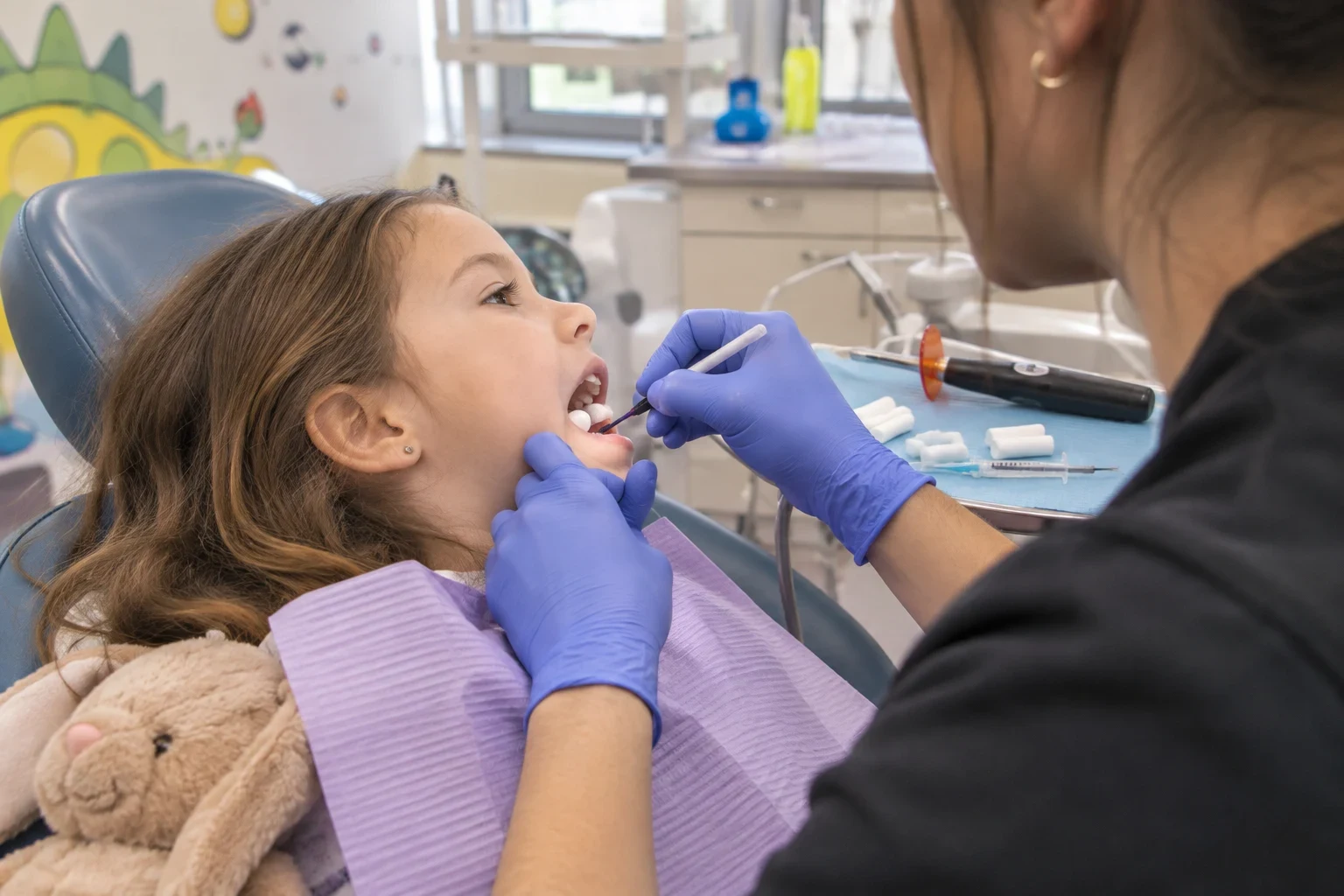
Back molars have deep grooves that a toothbrush bristle is too wide to clean. We fill those grooves with a thin sealant coating so food and bacteria have nowhere to settle. There is no drilling and usually no numbing, and we explain which material fits each tooth.
What a sealant does and why the material matters
The chewing surface of a molar is not flat. It is folded into pits and fissures, some narrower than a single toothbrush bristle. Plaque packs into those folds, and the acid it makes starts cavities there long before it reaches the smooth sides of the tooth. A sealant flows into the grooves, hardens and leaves a smooth surface that brushing can actually clean.
We use two main types of sealant. Resin-based sealant is a light-cured plastic that grips dry enamel tightly and holds up well under chewing for years. Glass ionomer sealant attaches chemically to the tooth, tolerates a little moisture and slowly releases fluoride, but it wears down faster. The right choice depends on the tooth, how fully it has erupted and how well your child can keep still with cotton in place.
After 11+ years in practice, we have found that explaining this trade-off up front matters more to parents than any brand name. You will know what went on your child's teeth and why.
What a sealant visit includes
- 01
Groove check before sealing
We look closely at each groove first. A sealant should go over healthy or very early-stage enamel, not over an active cavity. If we see decay that needs more than a seal, we tell you and talk through a filling instead.
- 02
Matched to each tooth
A fully erupted six-year molar usually gets resin. A molar still partly covered by gum tissue, where saliva is hard to keep away, often does better with glass ionomer as a temporary seal we can upgrade later.
- 03
Cleaning and etching the enamel
We clean the grooves, then apply a mild etching gel for a few seconds. This roughens the enamel at a microscopic level so the sealant can lock in.
- 04
Curing and bite check
Resin is hardened with a blue curing light. Then we check your child's bite and smooth any high spot so the tooth feels normal when they chew.
- 05
Retention checks at future exams
Sealants can chip or wear. At each exam and cleaning we look at every sealed tooth and touch up any area that has lost coverage.
Questions about Sealants?
Call(781) 494-8370When your child may be ready for sealants
New permanent molars
First permanent molars usually come in around age six and second molars around age twelve. Sealing them soon after they erupt protects the grooves during the years cavities are most likely.
Deep, stained grooves
Dark lines in the grooves of the back teeth can mean food and plaque are packing in. Sometimes it is only stain, and sometimes it is early decay, so we check before sealing.
A history of cavities
If your child has already had fillings, the remaining grooves are at higher risk. Sealing them is a simple way to protect the molars that have not had a cavity yet.
Brushing that misses the back
Kids often brush the front teeth well and skim past the molars. Braces, a strong gag reflex or a busy morning routine make it harder still.
How the appointment runs
- 1
Polish and isolate
We clean the chewing surface and place cotton rolls or a small isolation guard to keep saliva off the tooth. Dryness is the main thing that decides how long a resin sealant lasts.
- 2
Etch and rinse
A gel goes on the grooves briefly, then we rinse and dry the tooth. Kids sometimes notice a sour taste, which rinses away right away.
- 3
Paint and set
We brush the sealant into the grooves and harden it with the curing light, or let glass ionomer set on its own. Each tooth takes only a few minutes.
- 4
Check and go
We test the bite with marking paper and adjust if needed. Your child can eat normally after the visit, with no numbness to wait out.
What changes the price of a sealant visit
We charge for sealants one tooth at a time, so the count of teeth sealed drives most of the total. Before we start, we walk you through the plan and which material goes on each tooth. We accept MasterCard, Visa and Discover, most insurance plans and the CareCredit Patient Payment Plan.
- How many teeth get sealed
- Four first molars make a smaller bill than all eight permanent molars with the premolars added in.
- Tooth type and insurance rules
- Many dental plans pay for sealants on permanent molars, often up to a set age. Baby molars and premolars are treated differently from plan to plan, so a quick look at your coverage helps.
- Material and timing
- A partly erupted tooth may get glass ionomer first, then a resin sealant once it has fully come in. That tooth needs two visits instead of one.
- Early decay in a groove
- When we find a small cavity during the check, that tooth may need a preventive resin or a filling in place of a plain sealant, and its cost changes to match.
Questions parents ask about sealants
Does getting sealants hurt?
No. There is no drilling and in most cases no numbing. The hardest part for most kids is keeping their mouth open and the tooth dry for a few minutes.
How long do sealants last?
Resin sealants often last several years with normal chewing. Glass ionomer wears faster but keeps releasing fluoride as it does. We check every sealant at regular exams and repair worn spots.
Do sealants contain BPA?
Some resin sealants can release a trace amount of BPA right after placement, and the measured exposure is very small and short-lived. Rinsing after the visit reduces it further. We are glad to go over the specific product we use with you.
Should baby teeth get sealants?
Usually we focus on permanent molars. Baby molars with very deep grooves, in a child who has had cavities, can be good candidates, and we will tell you if we think that applies.
Do sealants replace brushing or fluoride?
No. Sealants protect the chewing grooves only. The sides of the teeth and the spaces between them still need brushing, flossing and fluoride treatment.
Protect those new molars
Families from Stoughton, Canton, Sharon and Easton bring their kids to us for sealants. Register as a new patient by phone and we will check whether your child's molars are ready.