ServicesPediatric Crowns
Pediatric Crowns in Stoughton
When decay or weak enamel has taken too much of a tooth for a filling to hold, a crown covers the whole tooth and keeps it working. We walk you through stainless steel, zirconia and resin crowns, and explain why one fits your child's tooth better.
What a Crown Does for a Child's Tooth
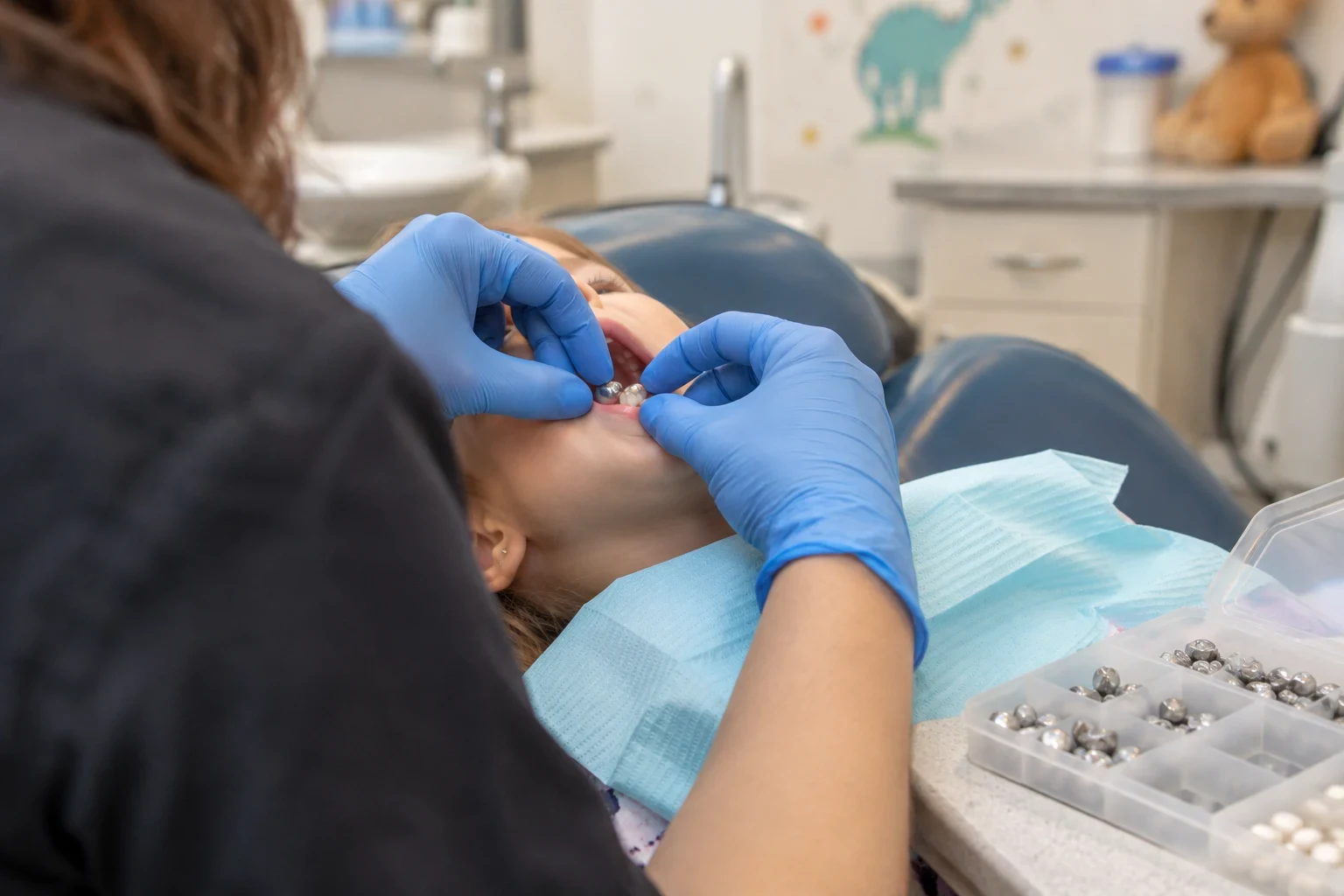
A pediatric crown is a preformed cap that fits over a baby tooth or a young permanent molar. It replaces the outer shell of the tooth, so the chewing load lands on the crown instead of on thin, decayed or poorly formed enamel. Baby teeth have thinner enamel and larger nerve chambers than adult teeth, which is why decay spreads through them faster and why a large filling in a baby molar often breaks or leaks.
We recommend a crown when decay reaches two or more surfaces of a molar, after a pulpotomy (described on our Root Canals page), or when enamel has formed soft or chalky and keeps chipping. In our 11+ years in practice, we have found that most parents simply want to know what the crown is made of and why. That conversation comes first, before any work starts.
Crown Materials and What Each Visit Covers
Stainless steel crowns
The workhorse for back baby teeth. The metal can be trimmed and crimped to grip the tooth, it tolerates a little moisture during cementing, and it rarely fails before the tooth falls out naturally. The trade-off is the silver color.
Zirconia crowns
A tooth-colored ceramic that is very hard and resists plaque buildup. Zirconia cannot be bent or crimped, so we remove more tooth structure to seat it passively, and the tooth must stay completely dry while it is cemented.
Resin strip crowns
For front teeth, we can fill a clear celluloid form with tooth-colored composite and shape it on the tooth. They look natural but can chip if your child bites hard objects, and they need a calm, still patient.
Pulp care when needed
If decay has reached the nerve, we treat the pulp first so the crown sits on a healthy base.
Bite and gum check
Before your child leaves, we check that the crown meets the opposing teeth evenly and that the edge sits cleanly at the gumline.
Signs Your Child's Tooth May Need a Crown
Decay on several surfaces
A cavity that wraps from the top of a molar onto its sides leaves too little wall for a filling to grip. Our Fillings page explains where that line usually falls.
A filling that keeps failing
Repeated breaks or new decay around an old filling suggest the tooth needs full coverage instead of another patch.
Chalky, yellow or crumbling enamel
Enamel that formed weak, as in molar hypomineralization, can wear quickly and feel sensitive to cold air and brushing.
After nerve treatment
A baby molar treated with a pulpotomy is more brittle and usually needs a crown to keep it from cracking.
A visibly broken tooth
A cracked or fractured tooth from a fall or hard food may need a crown to hold the remaining pieces together.
How Crown Day Works
- 1
Explain and choose
We show you the tooth on X-rays and talk through which materials suit its position, size and your child's comfort level. You decide with full information.
- 2
Numbing and comfort
We use gentle topical gel before local anesthetic. For kids who are very anxious or need several crowns, our Sedation Dentistry page covers the options.
- 3
Removing decay and shaping
We clear all decay, then shape the tooth so the crown seats fully. Zirconia needs more shaping than steel because it cannot be crimped.
- 4
Fitting and cementing
We try in preformed crowns to find the right size, then cement the final one in place. Most crowns are finished in the same visit.
- 5
Check and aftercare
We check the bite, then tell you what to expect as the numbness wears off over the next few hours.
What Moves the Price of a Child's Crown
The total for a crown comes down to what it is made of and what the tooth needs beneath it. Before any treatment, we go over the expected charges with you so the bill matches what we discussed. Cards are welcome, including MasterCard, Visa and Discover, and so is the CareCredit Patient Payment Plan. We also work with most insurance plans.
- Stainless steel versus zirconia
- The two materials cost different amounts and take different chair time, since zirconia needs more shaping and a fully dry tooth. Many insurance plans also cover them at different levels.
- Nerve treatment first
- If decay has reached the pulp, a pulpotomy is done before the crown and is billed as its own procedure.
- How many teeth
- Crowning several teeth in one visit changes the total and can shift the decision about whether sedation is worth it.
- Sedation
- When your child needs sedation to stay comfortable, it appears as a separate line on the estimate.
Parent Questions on Pediatric Crowns
Something not covered here? (781) 494-8370
My child's baby tooth will come out eventually. Does it really need a crown?
Back baby molars commonly stay in the mouth until somewhere around age 10 to 12. During those years they keep room open for the adult teeth and help your child chew and talk clearly. Losing a decayed molar early lets nearby teeth tip into the gap and crowd out the permanent tooth, which can lead to a space maintainer down the road.
Should we choose a silver crown or a tooth-colored one?
It depends on the tooth. Stainless steel is forgiving to place and holds up very well on back teeth. Zirconia matches natural enamel, but it needs a dry tooth and more trimming, so it works best for a child who can stay still in the chair. We go over which fits your child's tooth before you make the call.
Is getting a crown painful for kids?
We numb the tooth completely before we start. Once the numbness fades, the gum around the crown can be tender for a day or two, and a children's pain reliever usually takes care of it. Keep an eye on your child so they do not chew the numb lip or cheek.
How many years will the crown hold up?
On a baby tooth, a well-fitted crown typically stays put until the tooth loosens and comes out naturally. On a young permanent molar, a stainless steel crown often serves as a long-term placeholder until the tooth has matured enough for an adult crown.
What daily care does a crowned tooth need?
Brush and floss it the same way as the other teeth, with extra attention where the crown meets the gum. Sticky candy and chewy treats can tug on a crown, so keep them occasional. We look at every crown during your child's regular exams and cleanings.
Talk Through Crown Options for Your Child
Call to set up a visit and we will look at the tooth, explain the material choices and plan the next step together.