ServicesSedation Dentistry
Sedation Dentistry in Stoughton for Kids
Some kids need more than a calm voice and a TV on the ceiling to get through a filling or extraction. We explain each sedation option, what it does in the body and how it wears off, so you can choose what fits your child before treatment starts.
What sedation does and when it makes sense
Sedation is not the same as numbing. Local anesthetic blocks pain in one area of the mouth. Sedation lowers anxiety and the gag reflex so your child can sit still while the work is done. Most children who get sedation also get local anesthetic, because the two solve different problems.
We suggest it when a child is very anxious, has a strong gag reflex, needs several teeth treated in one sitting, or has sensory or developmental needs that make a long visit hard. For a quick cleaning or a single sealant, it is usually not needed, and we will say so.
Over 11+ years in practice, we have learned that the right level of sedation is the lightest one that lets the work get done well. Lighter options wear off faster and carry fewer side effects.
The sedation options we explain
- 01
Nitrous oxide with oxygen
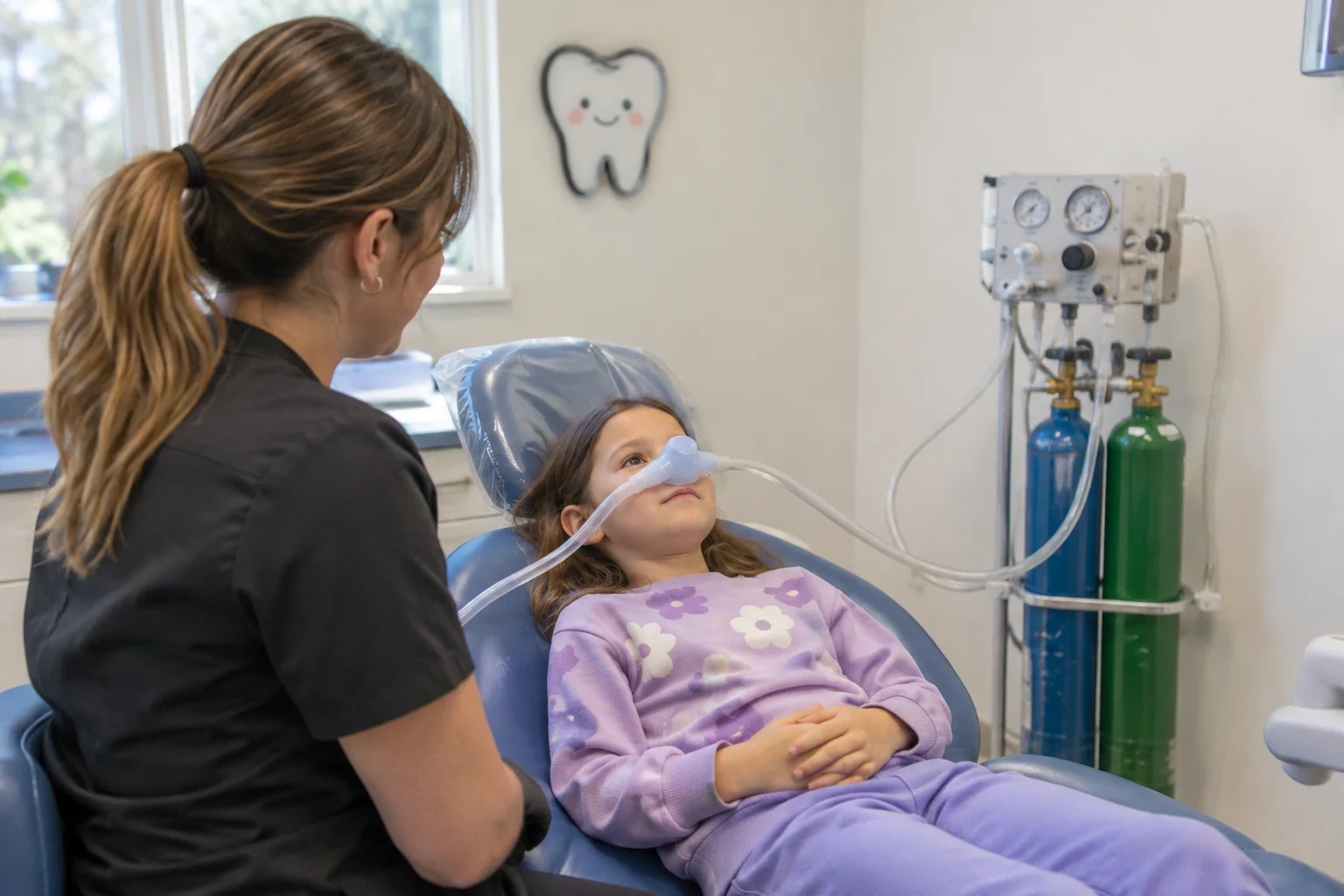
Often called laughing gas, it is breathed through a small scented nose hood. Your child stays awake and can answer questions, but feels relaxed and a little floaty. It clears the body within minutes once we switch to pure oxygen, so most kids leave alert.
- 02
Oral sedation
A liquid medication taken by mouth before treatment, dosed by your child's weight. It takes longer to start working and longer to wear off than nitrous, so your child will need a quiet rest of the day with an adult close by.
- 03
Monitoring during treatment
A pulse oximeter on a finger or toe tracks oxygen level and heart rate the whole time. We watch breathing and color, and we adjust or stop the sedation if anything looks off.
- 04
Pre-visit health review
Before any sedation we go over medications, allergies, asthma, recent colds and snoring or sleep apnea. A stuffy nose, for example, can make nitrous less effective, so timing matters.
- 05
Deeper sedation discussion
If a child needs more extensive work than is sensible with in-office sedation, we explain the deeper options, what they involve and where they take place, so you have the full picture before deciding.
Questions about Sedation Dentistry?
Call(781) 494-8370Signs your child may do better with sedation
Past visits ended early
If crying, kicking or panic has stopped treatment before, a calmer start can protect your child and the work.
A strong gag reflex
Some kids gag at the mirror or a cotton roll. Nitrous oxide often settles that reflex enough to place a filling or crown.
Several teeth need work
When multiple cavities or a pediatric crown and a filling are planned, sedation can let us finish in fewer, longer visits instead of many short ones.
Sensory or developmental needs
Bright lights, sounds and touch can be overwhelming for some children. Sedation can make the chair tolerable.
Very young age with real decay
Toddlers can't always follow directions to hold still. When treatment can't wait, sedation is one way to do it safely.
How a sedation visit runs
- 1
Consult and health check
We look at the teeth, review your child's health history and explain which option we recommend and why. You get the plan before any appointment for treatment is set.
- 2
Instructions before the day
We give clear eating and drinking instructions, which matter most for oral sedation, because an empty stomach lowers the risk of vomiting. Dress your child in loose, comfortable clothes.
- 3
Treatment with monitoring
Your child breathes nitrous through the nose hood or takes the oral medication and we wait for it to take effect. Then we numb the area and do the work while tracking oxygen and heart rate.
- 4
Recovery and going home
After nitrous we give pure oxygen for a few minutes before your child sits up. After oral sedation we keep your child with us until they are steady, then walk you through soft foods, rest and what to watch for.
What affects the cost of sedation
Sedation is usually billed as its own line, separate from the dental work done during the visit, so the total depends on both. Before treatment we go over the expected charges so the bill holds no surprises. For payment, you can use a MasterCard, Visa or Discover card, most insurance plans, or the CareCredit Patient Payment Plan.
- Type of sedation
- Nitrous oxide and oral sedation carry different charges. They use different medications and need different preparation and recovery time.
- Length of the appointment
- More treatment in one sitting means more time under sedation and more time on the monitor.
- Work being done
- Fillings, extractions or pediatric crowns finished during the visit are listed separately from the sedation itself.
- Insurance coverage
- Plans differ a lot on sedation. Some pay for nitrous in young children and some do not, so we look at what your plan covers before the visit is scheduled.
Questions parents ask about sedation
Is nitrous oxide safe for kids?
Nitrous oxide has been used in children's dentistry for decades. It is always blended with oxygen, we can turn the level up or down during treatment, and it clears quickly once the gas stops. A pulse oximeter tracks your child's oxygen level from start to finish.
Will my child be asleep?
Not with nitrous oxide. Your child stays awake and can answer us. Oral sedation makes kids drowsy and some nod off, but they can still be woken and will respond to a voice or touch.
Are parents allowed in the treatment room?
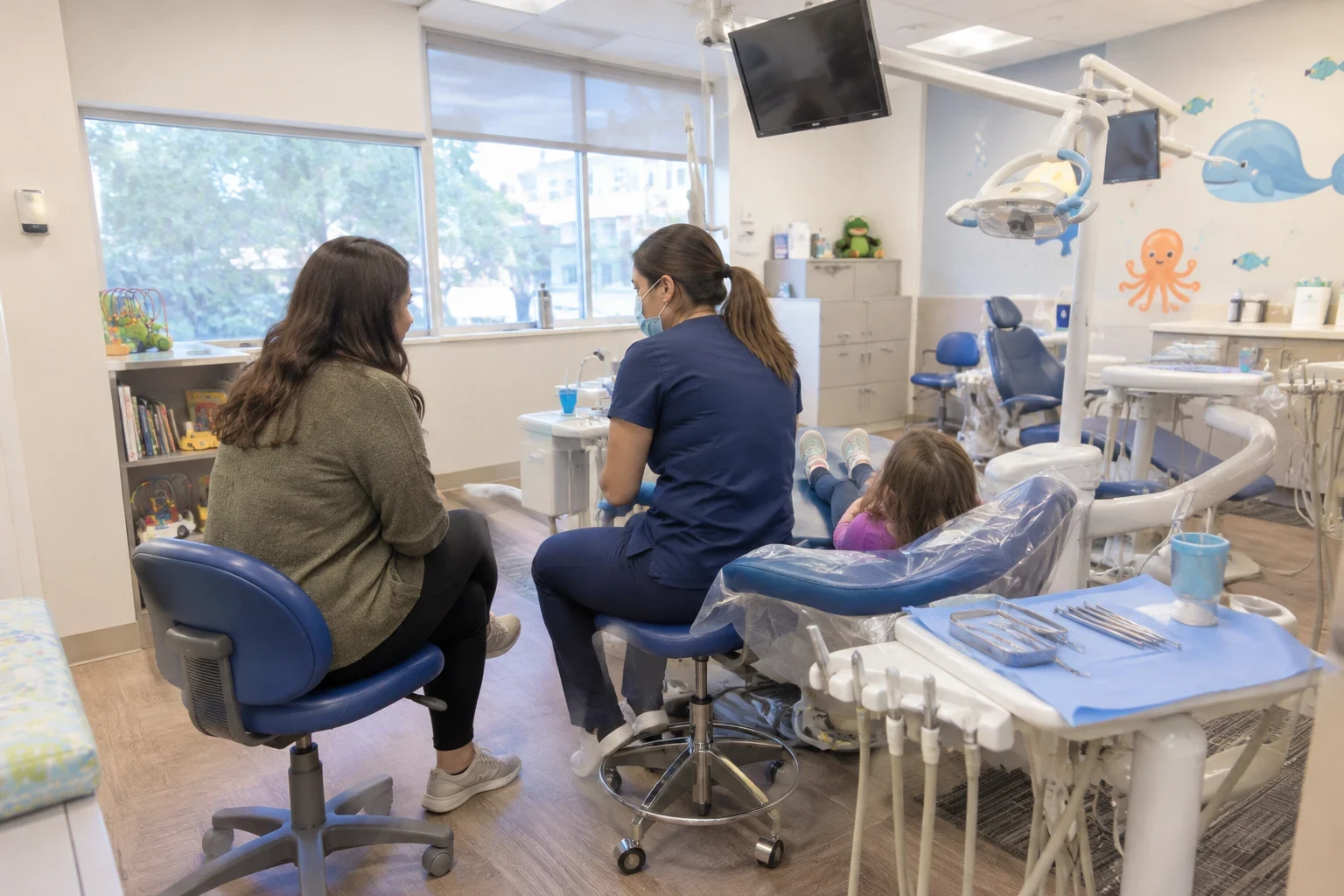
For nitrous visits, many parents sit nearby while we work, and a familiar face often helps a young child relax. For oral sedation the arrangement can differ, so we settle the plan with you during the consult, well before the treatment day.
How will my child feel afterward?
After nitrous, most kids feel like themselves within a few minutes and can go back to their day. After oral sedation, expect sleepiness and wobbly walking for several hours. Plan a quiet afternoon with an adult keeping a close eye on them.
Does sedation replace the numbing shot?
No. Sedation calms your child, while local anesthetic blocks pain signals from the tooth. Most treatment uses both, and a relaxed child usually finds the numbing step much easier to sit through.
Talk through sedation before you decide
We will look at your child's teeth, review their health and explain which option fits. Families come to us from Stoughton, Canton, Sharon and nearby towns.