ServicesFillings
Fillings for Kids in Stoughton
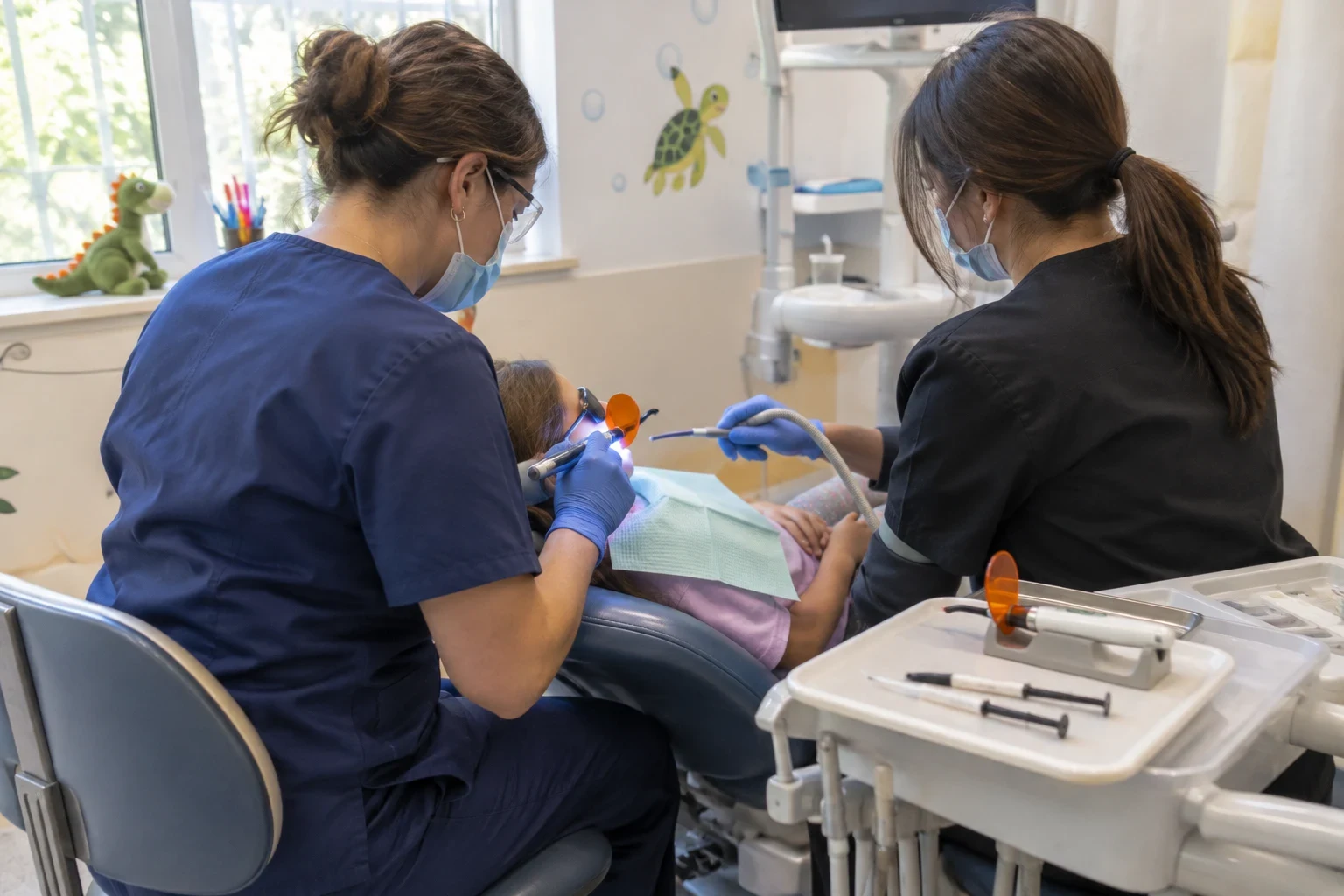
When a cavity is caught early, a small filling stops the decay and saves the tooth. We gently remove the soft, decayed enamel, then explain which filling type fits your child's tooth, based on its size, its location and how many years it still needs to last.
What a filling does and when it makes sense
A cavity is a spot where acid from mouth bacteria has dissolved enamel and started into the dentin underneath. It will not heal on its own. A filling removes the damaged tooth structure and replaces it with a tooth-colored filling that seals the opening, so bacteria can no longer work their way toward the nerve.
Baby teeth matter more than many parents expect. Their enamel is roughly half as thick as adult enamel, so decay reaches the dentin and pulp faster. Back baby molars often stay in until age 10 to 12, and they hold space for the adult teeth coming in behind them. Filling them while the cavity is small keeps your child comfortable and avoids larger work later.
Not every cavity is a filling case. If decay has reached the pulp or broken down most of the tooth, we will tell you so and talk through pediatric crowns or root canals instead.
Filling materials we explain before we start
Composite resin
A tooth-colored blend of plastic resin and fine glass particles that adheres to the enamel and hardens under a blue curing light. It is strong, blends in and works well on front teeth and on small to medium cavities in molars. The trade-off is that it needs a completely dry tooth while it sets, which takes cooperation from your child.
Glass ionomer
A tooth-colored cement that attaches chemically to the tooth and slowly releases fluoride into the surrounding enamel. It tolerates a little moisture, so it suits younger kids and cavities near the gumline. It wears faster than composite, which is often fine on a baby tooth that will fall out in a few years.
Resin-modified glass ionomer
A hybrid that keeps the fluoride release of glass ionomer and adds some of the strength of resin. We often consider it for baby molars that need to last several more years.
Numbing and comfort
A flavored topical gel goes on first, then local anesthetic, so your child feels pressure rather than pain. For anxious kids or bigger treatment needs, we can talk about sedation dentistry.
Dry work area and bite check
Small cotton pads or a thin shield fitted around the tooth keep saliva off the work area and stop water spray and tooth debris from reaching the throat. Once the filling has set, your child bites on marking paper so we can smooth any high spot, and then we polish the surface.
When a cavity may be forming
Chalky bands or dark grooves
A dull, chalky band close to the gumline is early enamel loss. Brown or black staining down in the chewing grooves often means decay has moved deeper.
Wincing at cold or sweets
Sensitivity to ice water or candy can mean the enamel is gone and the dentin underneath is exposed.
Food packing between teeth
A cavity between two molars can leave a gap that traps food. Kids may complain or pick at the spot.
Chewing on one side
Young children rarely say a tooth hurts. Favoring one side at meals is often the first clue.
Found on an X-ray
Many cavities between baby molars only show up on bitewing X-rays taken at exams and cleanings.
How a filling visit goes
- 1
Look and explain
We confirm the cavity with an exam and X-rays if needed, then show you what we see, which option we suggest and why.
- 2
Numb gently
Topical gel first, then a slow anesthetic injection. We use kid-friendly words and tell your child what each step will feel like.
- 3
Clean out the decay
We remove only the soft, decayed tooth structure and keep as much healthy enamel as possible.
- 4
Place and shape
The filling goes in, is cured or set, and is shaped to match the tooth's grooves. Most single fillings take well under an hour.
- 5
After the visit
Lips and cheeks stay numb for a few hours, so watch that your child does not chew them. Soft foods are best until the numbness wears off.
What affects the cost of a filling
You hear the cost before we start, so nothing comes as a surprise. The tooth and the filling type drive the number more than anything else. For payment, we take MasterCard, Visa and Discover cards, work with most insurance plans, and offer the CareCredit Patient Payment Plan.
- Number of surfaces
- A cavity on one surface is a smaller filling than one that wraps around two or three surfaces of a molar.
- Filling type
- Composite, glass ionomer and resin-modified glass ionomer are priced differently, and insurance plans may cover each one differently.
- Number of teeth
- Treating several cavities in one visit changes the total and may change how we plan comfort.
- Sedation
- Some kids do better with sedation for a filling visit. When we recommend it, it is billed on its own line, and we go over that charge with you before the appointment.
Fillings: what parents want to know
Something not covered here? (781) 494-8370
My child's tooth is going to come out eventually. Is a filling really worth it?
Usually, yes. Back baby molars often hang on until age 10 to 12, and decay left alone can spread to the nerve and cause pain or infection. If the tooth is lost early, the teeth beside it can drift into the gap the adult tooth needs, which can mean a space maintainer or crowding later.
Which material is best for my child?
It depends on the tooth, the cavity size, how long the tooth needs to last and how well your child can sit still. Composite is strong and natural looking but needs a dry tooth. Glass ionomer releases fluoride and handles moisture better. We explain the trade-offs and let you decide.
Will my child feel the filling?
With topical gel and local anesthetic, most kids feel pressure and vibration, not pain. Over 11+ years in practice, we have learned to slow down and explain each step, which helps nervous kids a great deal.
How long do kids' fillings last?
It varies with the material, the size of the filling and your child's brushing and diet. We check every filling at regular exams and tell you if one is wearing or leaking at the edges.
Can fillings be prevented next time?
Sealants on the chewing surfaces of molars and fluoride treatment at checkups lower the chance of new cavities. Limiting sticky snacks and sipping juice between meals helps too.
Get that cavity taken care of
A small filling now is easier on your child than a bigger repair later. New to our office? We will get your child registered and set up the visit on the same call.