ServicesExtractions
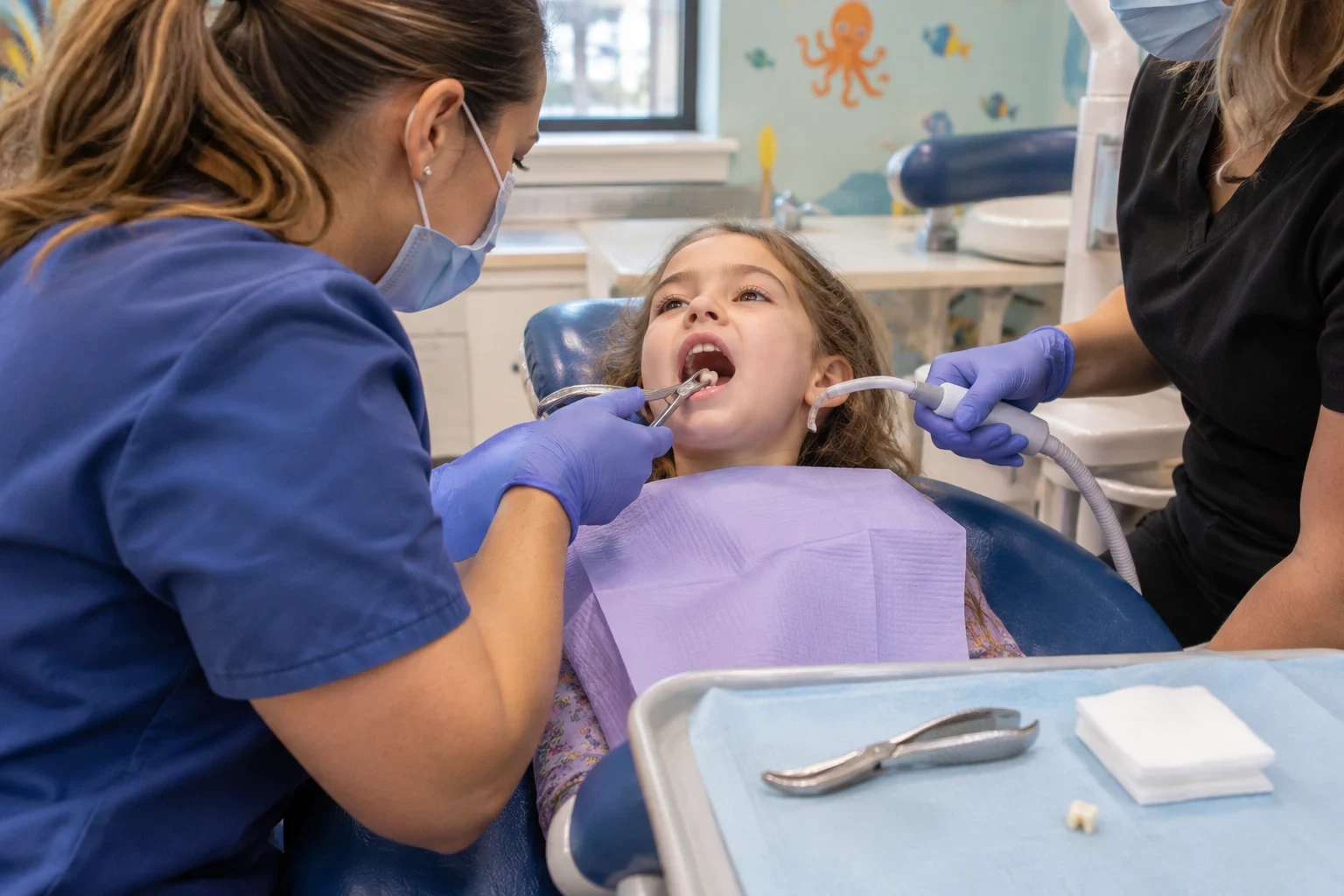
Tooth Extractions for Kids in Stoughton
Sometimes a tooth has to come out. It may be too decayed to rebuild, cracked from a fall, or stuck in place while the adult tooth comes in behind it. We explain why, numb thoroughly, work gently and send you off with clear aftercare steps.
When a tooth needs to come out
Keeping the tooth is where we start. Pulp therapy, a pediatric crown or a filling will often hold a baby tooth in place until it loosens at the normal age. Removal becomes the better option when the damage goes beyond what those treatments can rebuild: decay that has eaten into the root or formed an abscess, a crack that runs under the gumline, or a baby tooth with roots that never dissolved while the permanent tooth pushes in next to it.
Baby teeth do real work. Each one reserves room for the adult tooth below and helps steer it into place. Before we take one out, we read the x-ray to find the permanent tooth and judge how close it is to coming in. Then we let you know whether the gap calls for a space maintainer or can be left open.
With 11+ years in practice, we have seen that kids cope with an extraction much better when nothing comes as a surprise. We describe every step in simple terms, both to your child and to you.
What an extraction visit includes
- X-rays and a clear reason
- A periapical or panoramic x-ray shows the root length, any infection at the root tip and the position of the adult tooth. You hear why the tooth is coming out before anything starts.
- Two-stage numbing
- A flavored topical gel numbs the gum surface first, so the local anesthetic that follows is barely felt. We give it slowly, because a slow injection is a more comfortable one.
- Sedation when it helps
- For anxious kids or longer visits, we can talk through sedation dentistry options. Nitrous oxide is the lightest, and it wears off within minutes once your child breathes plain oxygen.
- Gentle removal technique
- Small instruments called elevators loosen the tooth from its ligament before forceps lift it out. Loosening first takes less force and leaves less soreness afterward.
- Socket care
- Gauze pressure helps a stable clot form. When a socket needs it, we place a few dissolvable sutures that break down on their own, so there's no removal visit.
- Space planning
- If a back baby tooth comes out early, neighboring teeth can drift into the gap. We'll tell you whether a stainless steel space maintainer is worth it for your child.
Signs your child may need a tooth removed
A double row of teeth
An adult tooth coming in behind a baby tooth that hasn't loosened is common with lower front teeth. If the baby tooth stays firm for several weeks, it may need help coming out.
A bump or pimple on the gum
A small swelling that drains near a decayed tooth usually means infection at the root. In a baby tooth, that infection can sit right next to the developing adult tooth.
Pain that keeps coming back
Throbbing at night or pain on chewing that returns after a filling can mean decay has reached the nerve. Sometimes the tooth can still be saved, and sometimes it can't.
A tooth broken in a fall
Cracks that run below the gumline often can't hold a filling or crown. We check how deep the break goes before deciding.
A baby tooth that won't budge
If the matching tooth on the other side fell out months ago, the x-ray will show whether something is in the way.
What affects the cost of an extraction
We price each extraction from what the exam and x-ray show, and we go over the cost with you before any work begins. For payment, we take MasterCard, Visa and Discover, work with most insurance plans and offer the CareCredit Patient Payment Plan.
Baby or permanent tooth
A baby tooth whose roots have partly dissolved usually lifts out with little effort. A permanent molar has longer roots that often curve, so the visit runs longer.
Simple or surgical
A tooth broken off at the gum, a root tip left behind or an impacted tooth may require lifting the gum or dividing the tooth into sections. Insurance treats that as a separate procedure code.
Sedation choice
Numbing with local anesthetic alone is the lower-cost option. Adding nitrous oxide or a deeper level of sedation adds to the total.
What comes after
X-rays and any space maintainer your child may need are separate line items. Your plan may cover each one at a different rate.
How the appointment goes
- 1
Look and explain
We examine the tooth, take any x-rays we need and walk you through the plan. Your child gets a simple version too, like the tooth getting a 'sleepy' gum before it wiggles out.
- 2
Numb and wait
Topical gel goes on first, then the local anesthetic. We give it a few minutes to take full effect and test the area before we begin.
- 3
Remove the tooth
We loosen the tooth with an elevator and lift it out with forceps. Most baby teeth come out in a minute or two. Your child feels pressure, not sharp pain.
- 4
Bite and go
Your child bites on gauze for about 20 to 30 minutes. You leave with written aftercare: soft foods, no straws or spitting for the first day, and how to handle the numb lip so it doesn't get chewed.

Questions parents ask about extractions
Will my child feel it?
With the anesthetic fully working, most kids notice a firm pushing sensation and nothing sharp. Before we start, we check that the area is numb, and if it isn't, we give it more time. Any soreness the next day tends to be mild and settles with the children's pain reliever your pediatrician suggests.
Why not just wait for the baby tooth to fall out?
An infected baby tooth keeps feeding that infection into the bone where the adult tooth is developing. A baby tooth that stays too long can also steer the permanent tooth out of line. If waiting is the safer choice for your child, we will say so.
Does my child need a space maintainer afterward?
It comes down to which tooth comes out and how far off the adult tooth is. Losing an upper or lower incisor early seldom leads to crowding. When a back molar is lost years ahead of schedule, the teeth on either side tend to tilt into the opening, so holding that space is usually worth it. Our space maintainers page explains the band-and-loop design and how it is fitted.
What can my child eat afterward?
For the first day, offer soft, cool foods such as yogurt, applesauce, pasta and scrambled eggs. Avoid straws and forceful spitting, because suction can pull the clot loose. Most kids are back to their usual meals within a day or two.
Can my child go back to school the same day?
After a simple extraction, most kids can return once the numbness fades, which usually takes a few hours. If your child had sedation deeper than nitrous oxide, plan on a quiet, restful rest of the day instead.

Get your child's tooth checked
If you've noticed a double row of teeth, a gum bump or a tooth that keeps hurting, we'll look at it, explain what we see and only remove a tooth when keeping it would cause more trouble.