ServicesRoot Canals
Root Canals for Kids in Stoughton
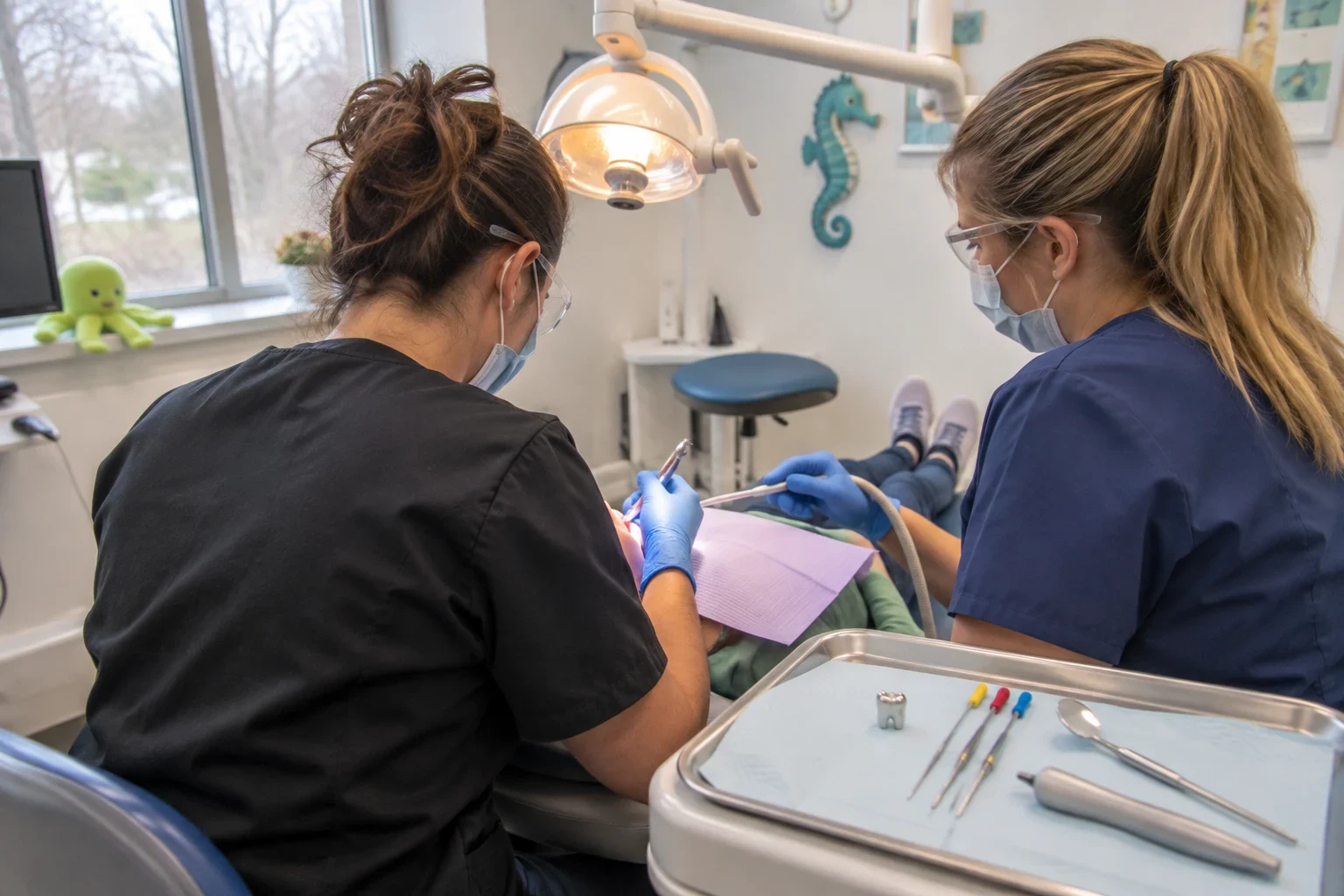
When decay reaches the nerve of a tooth, we treat the infected pulp and keep the tooth in place. We explain which procedure fits your child's tooth, what we would place inside it and why, so you know exactly what is planned.
What a Root Canal Means for a Child
Inside every tooth is the pulp, a soft core of nerves and blood vessels. Deep decay or a hard knock can let bacteria reach it. Once the pulp is inflamed or infected, a filling alone cannot fix the problem, and the pain or swelling usually gets worse.
For kids, a root canal is often smaller than the adult version. A pulpotomy removes only the inflamed pulp in the crown of a baby tooth and seals the healthy pulp in the roots. A pulpectomy removes all of the pulp when the infection has spread down into the roots. Permanent teeth in older children and teens may need a full root canal.
Saving a baby tooth matters because it holds space for the adult tooth underneath and helps your child chew and speak. Over 11+ years in practice, we have found that most parents simply want to know what the options are and what each one is made of. That is where we start.

Procedures and Materials We Use
- 01
Pulpotomy for baby molars
We remove the infected pulp from the crown of the tooth and place a medicament over the remaining pulp. Mineral trioxide aggregate (MTA) and similar calcium silicate cements seal well and encourage healing. Ferric sulfate is another option that controls bleeding before the tooth is sealed.
- 02
Pulpectomy with resorbable paste
When the roots are infected, we clean out all of the pulp and fill the canals with a paste that dissolves along with the baby tooth's roots. Iodoform and calcium hydroxide pastes are used because they resorb naturally and do not get in the way of the adult tooth coming in.
- 03
Root canals on permanent teeth
For adult teeth, the canals are cleaned, shaped and filled with gutta-percha, a rubber-like filler that stays in place for life. If the roots are still forming in a young teen, we may use a calcium silicate cement that lets the root keep developing.
- 04
A crown to protect the tooth
A treated baby molar is more likely to crack, so it usually gets a crown. Stainless steel crowns are very durable and cost less. Zirconia crowns match the tooth's color but need more of the tooth reshaped. You can read more on our Pediatric Crowns page.
- 05
Numbing and comfort options
Every procedure starts with local anesthetic, placed slowly after a numbing gel. If your child is very nervous or the visit will run long, our Sedation Dentistry page covers the other choices, and we are glad to go over them with you.
Questions about Root Canals?
Call(781) 494-8370Signs Your Child's Tooth May Need Pulp Treatment
Pain that wakes them up
A toothache that comes on without chewing, or wakes your child at night, often means the pulp is inflamed.
Lingering sensitivity
Short sensitivity to cold is common. Pain that lasts after the cold drink is gone points to nerve involvement.
A bump on the gum
A small pimple-like bump near a tooth is often a draining abscess. It may not hurt, but it means infection is present.
A dark or gray tooth
A front tooth that turns gray after a fall may have a damaged pulp. We check it with an X-ray before deciding anything.
A large cavity you can see
A deep brown or black hole in a molar may already reach the nerve. Catching it early can mean a smaller procedure, or just a filling.
How the Visit Goes
- 1
Exam and X-rays
We examine the tooth, check how it reacts to cold and gentle tapping, and use X-rays to judge the depth of the decay and whether infection has reached the roots. Then we tell you whether a filling, a pulpotomy, a pulpectomy or an extraction makes the most sense.
- 2
Numbing and isolation
We numb the area gently and place a small rubber dam to keep the tooth dry and clean. Dryness matters because the medicaments and cements bond poorly to wet tooth surfaces.
- 3
Treating the pulp
We remove the decay and infected pulp, disinfect the space and place the chosen medicament or paste. Most baby tooth procedures take well under an hour.
- 4
Crown or filling
The tooth is sealed the same visit, usually with a crown on a baby molar. We explain how to care for it and what soreness to expect over the next day or two.
What Affects the Cost
The price depends on which procedure the tooth needs and how it will be restored afterward. We explain each part before treatment starts, so there are no surprises. You can pay by Visa, MasterCard or Discover, we work with most insurance plans, and the CareCredit Patient Payment Plan is also an option.
- Pulpotomy, pulpectomy or full root canal
- Treating only the crown pulp takes less time than cleaning every canal. Permanent molars with three or four canals take the longest.
- Crown material
- Stainless steel and zirconia crowns differ in cost, and front teeth may use a different option from molars.
- Sedation
- If your child needs sedation to be comfortable, that adds to the visit.
- Your insurance plan
- Coverage for pulp treatment and crowns varies by plan. We can help you understand what your plan lists before the visit.
Root Canal Questions From Parents
My child will lose this tooth eventually, so why save it?
Baby molars often hold their place until somewhere around age 10 to 12. If one comes out years early, the neighboring teeth can tip into the gap and leave too little room for the adult tooth. Keeping the treated tooth protects chewing and spacing until it is ready to go.
Will the medicament harm the adult tooth underneath?
The materials we use for baby teeth are chosen for that reason. Resorbable pastes dissolve along with the baby tooth's roots, and MTA-type cements are biocompatible. We check the developing tooth on X-rays at follow-up exams.
Does a root canal hurt?
The tooth is fully numbed, so most kids feel pressure, not pain. Some soreness for a day or two afterward is normal and usually eases with children's pain medicine your pediatrician approves.
Is pulling the tooth a better choice?
Sometimes it is, if the tooth is badly broken or close to falling out. When we extract a baby tooth early, your child may need a space maintainer. We will tell you honestly which route fits the tooth.
How long does a treated baby tooth last?
With a crown in place and good brushing, it usually lasts until it falls out naturally. Regular exams let us spot any change early.
Get Your Child's Tooth Checked
If your child has tooth pain or a bump on the gum, we can see them and explain every option. New families are welcome from Stoughton and nearby towns like Canton and Sharon.